Author page: ukdadmin

Sapphire

Sapphire

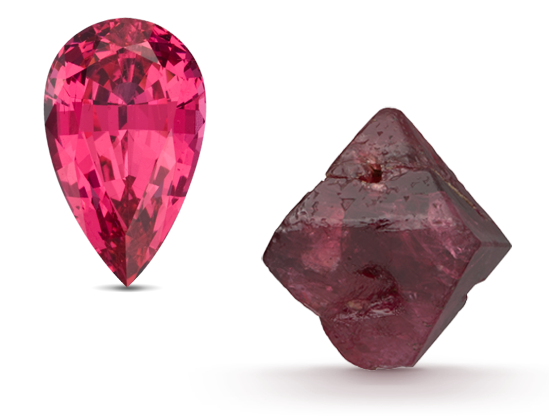
Besides blue sapphire and ruby, the corundum family also includes so-called “fancy sapphires.” They come in violet, green, yellow, orange, pink, purple, and intermediate hues. Some stones exhibit the phenomenon known as color change, most often going from blue in daylight or fluorescent lighting to purple under incandescent light. Sapphires can even be gray, black, or brown. Kashmir Intensely saturated…

Read more

Ruby

Ruby

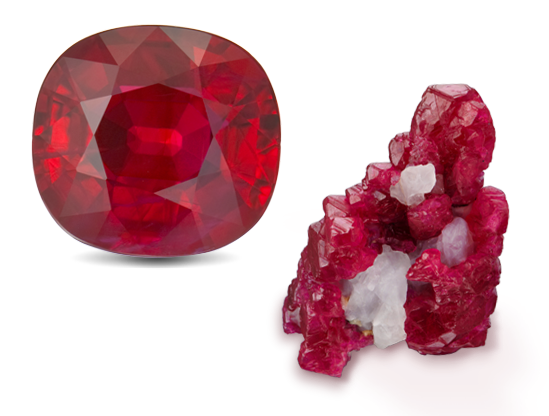
Rubies can command the highest per-carat price of any colored stone. This makes ruby one of the most important gems in the colored stone market. In its purest form, the mineral corundum is colorless. Trace elements that become part of the mineral’s crystal structure cause variations in its color. Chromium is the trace element that causes ruby’s red color. Ratnaraj…

Read more

Rose Quartz

Rose Quartz

The color of rose quartz ranges from very light pink (almost white) to medium-dark pink. The most appealing color typically occurs in larger sizes; small rose quartz specimens with good color tend to be scarce. Rose quartz is usually found in massive form, so well-shaped crystals are highly prized. Delicate color The deepest colors often occur in large sizes; small…

Read more

Peridot

Peridot

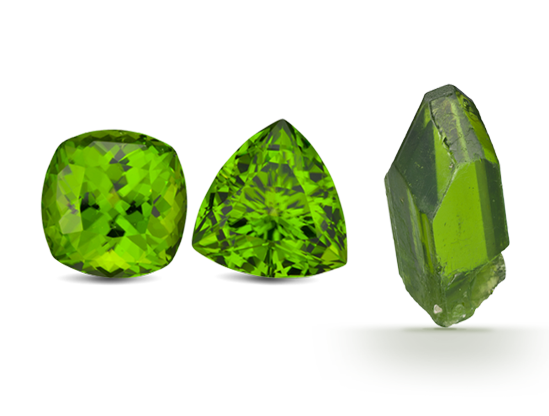
The ancient Egyptians mined peridot on the Red Sea island of Zabargad, the source for many large fine peridots in the world’s museums. The Egyptians called it the “gem of the sun.” Today this gem is still prized for its restful yellowish green hues and long history. Large strongly-colored, examples can be spectacular, and attractive smaller gems are available for…

Read more

Pearl

Pearl

Perhaps the best-loved gems of all time, pearls—natural and cultured—occur in a wide variety of colors. The most familiar are white and cream, but the palette of colors extends to every hue. Natural pearls form around a microscopic irritant in the bodies of certain mollusks. Cultured pearls are the result of the deliberate insertion of a bead or piece of…

Read more

Opal

Opal

Because opal has the colors of other gems, the Romans thought it was the most precious and powerful of all. The Bedouins believed that opals contained lightning and fell from the sky during thunderstorms. When Australia’s mines began to produce opals commercially in the 1890s, it quickly became the world’s primary source for this October birthstone. 0.2 Microns Grids of…

Read more

Morganite

Morganite

Morganite’s subtle color is caused by traces of manganese. Because morganite has distinct pleochroism—pale pink and a deeper bluish pink—it’s necessary to orient the rough carefully for fashioning. Strong color in morganite is rare, and gems usually have to be large to achieve the finest color. Salmon Color Untreated morganite often has a strong orange color component, creating a salmon…

Read more

Moonstone

Moonstone

Moonstone is a variety of the feldspar-group mineral orthoclase. During formation, orthoclase and albite separate into alternating layers. When light falls between these thin layers it is scattered producing the phenomenon called adularescence. Adularescence is the light that appears to billow across a gem. Other feldspar minerals can also show adularescence including labradorite and sanidine. Adularescence Moonstone’s unearthly glow is…

Read more

Lapis Lazuli

Lapis Lazuli

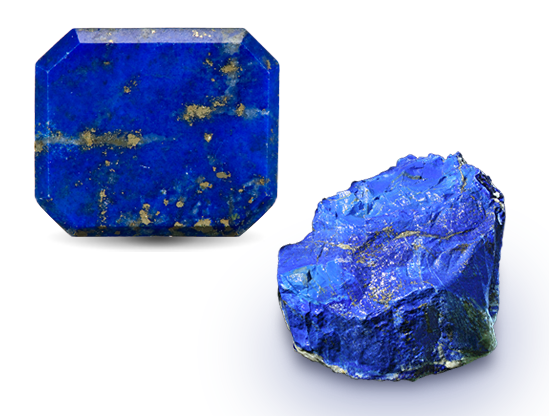
This ancient rock is an aggregate of several minerals. The three major minerals that comprise lapis are lazurite, calcite, and pyrite. The rock can also contain lesser amounts of diopside, amphibole, feldspar, or mica. Lazurite is the ingredient responsible for producing the gem’s most prized color—bright royal blue. Ancient Lapis was treasured by the ancient civilizations of Mesopotamia, Egypt, China,…

Read more

Kunzite

Kunzite

Kunzite is the best-known variety of the mineral spodumene. It’s named after famed gemologist George Frederick Kunz, who was the first to identify it as a unique variety of spodumene. Kunzite gets its delicate color from trace amounts of manganese. California’s San Diego County is an important source of kunzite. Spodumene Kunzite is the best-known variety of spodumene. Others are…

Read more

Jade

Jade

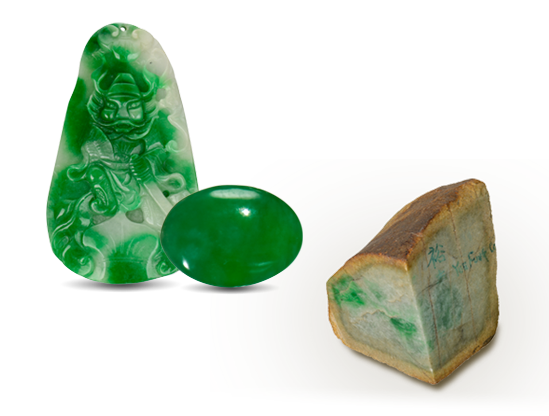
Jade has its cultural roots in the smoke-dimmed caves and huts that sheltered prehistoric humans. Around the world, Stone Age workers shaped this toughest of gems into weapons, tools, ornaments, and ritual objects. Their carvings invoked the powers of heaven and earth and mystic forces of life and death. Confucius The philosopher wrote that jade is like virtue and its…

Read more

Iolite

Iolite

In legends, ancient Viking navigators used thin slices of iolite as filters to help locate the sun on cloudy days. Whether or not the tales are true, iolite (mineralogists call it cordierite) can be fashioned into beautiful gems. Strongly pleochroic iolite has been incorrectly called “water sapphire,” as it can display a blue to violet hue in one direction and…

Read more