Gemstones

Opal

Opal

Because opal has the colors of other gems, the Romans thought it was the most precious and powerful of all. The Bedouins believed that opals contained lightning and fell from the sky during thunderstorms. When Australia’s mines began to produce opals commercially in the 1890s, it quickly became the world’s primary source for this October birthstone. 0.2 Microns Grids of…

Read more

Morganite

Morganite

Morganite’s subtle color is caused by traces of manganese. Because morganite has distinct pleochroism—pale pink and a deeper bluish pink—it’s necessary to orient the rough carefully for fashioning. Strong color in morganite is rare, and gems usually have to be large to achieve the finest color. Salmon Color Untreated morganite often has a strong orange color component, creating a salmon…

Read more

Moonstone

Moonstone

Moonstone is a variety of the feldspar-group mineral orthoclase. During formation, orthoclase and albite separate into alternating layers. When light falls between these thin layers it is scattered producing the phenomenon called adularescence. Adularescence is the light that appears to billow across a gem. Other feldspar minerals can also show adularescence including labradorite and sanidine. Adularescence Moonstone’s unearthly glow is…

Read more

Lapis Lazuli

Lapis Lazuli

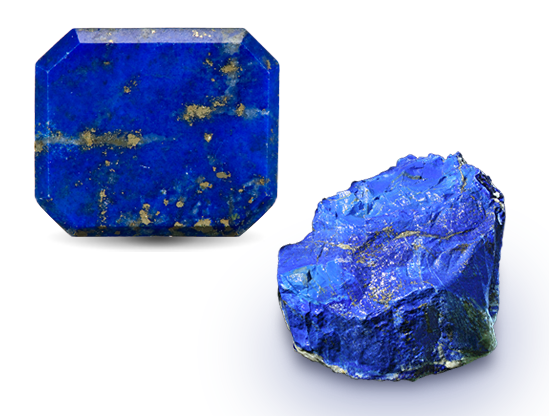
This ancient rock is an aggregate of several minerals. The three major minerals that comprise lapis are lazurite, calcite, and pyrite. The rock can also contain lesser amounts of diopside, amphibole, feldspar, or mica. Lazurite is the ingredient responsible for producing the gem’s most prized color—bright royal blue. Ancient Lapis was treasured by the ancient civilizations of Mesopotamia, Egypt, China,…

Read more

Kunzite

Kunzite

Kunzite is the best-known variety of the mineral spodumene. It’s named after famed gemologist George Frederick Kunz, who was the first to identify it as a unique variety of spodumene. Kunzite gets its delicate color from trace amounts of manganese. California’s San Diego County is an important source of kunzite. Spodumene Kunzite is the best-known variety of spodumene. Others are…

Read more

Jade

Jade

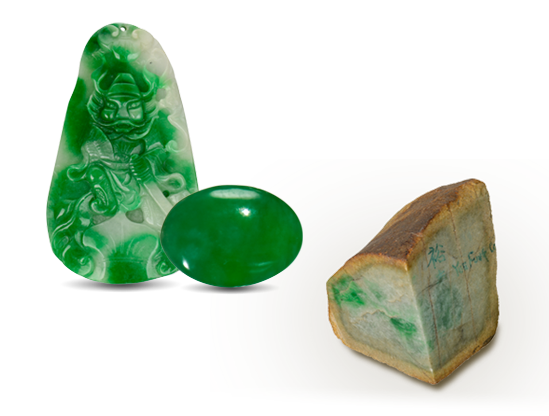
Jade has its cultural roots in the smoke-dimmed caves and huts that sheltered prehistoric humans. Around the world, Stone Age workers shaped this toughest of gems into weapons, tools, ornaments, and ritual objects. Their carvings invoked the powers of heaven and earth and mystic forces of life and death. Confucius The philosopher wrote that jade is like virtue and its…

Read more

Iolite

Iolite

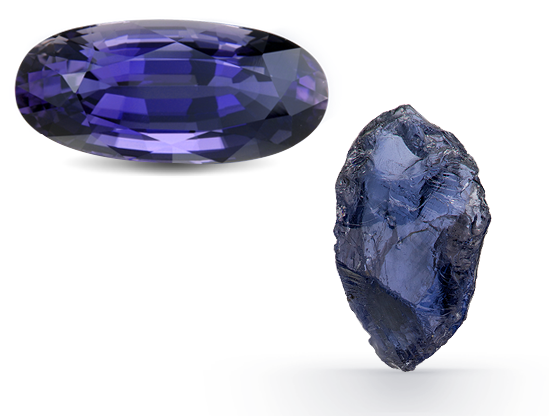
In legends, ancient Viking navigators used thin slices of iolite as filters to help locate the sun on cloudy days. Whether or not the tales are true, iolite (mineralogists call it cordierite) can be fashioned into beautiful gems. Strongly pleochroic iolite has been incorrectly called “water sapphire,” as it can display a blue to violet hue in one direction and…

Read more

Garnet

Garnet

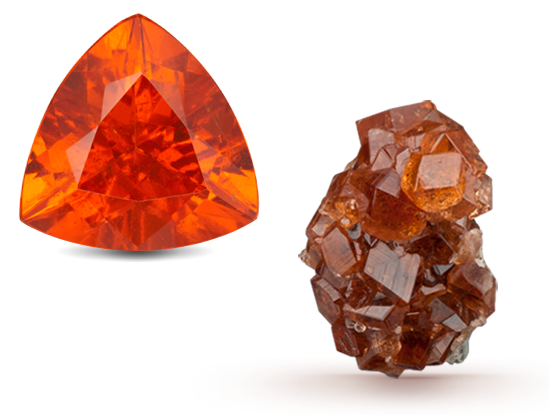
Red garnets have a long history, but modern gem buyers can pick from a rich palette of garnet colors: greens, oranges, pinkish oranges, deeply saturated purplish reds, and even some blues. Red garnet is one of the most common and widespread of gems. But not all garnets are as abundant as the red ones. A green garnet, tsavorite, is rarer…

Read more

Emerald

Emerald

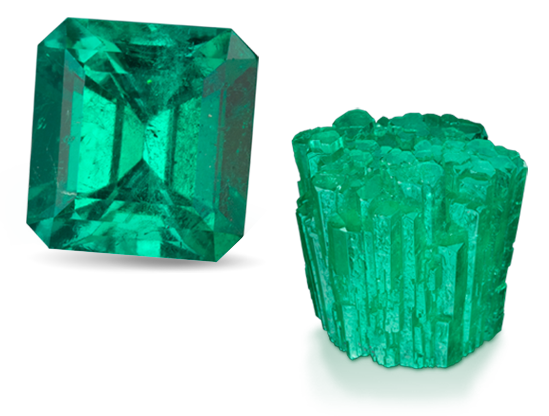
Gem experts differ on the degree of green that makes one stone an emerald and another stone a less-expensive green beryl. Most gemologists, gemological laboratories, and colored stone dealers call a stone green beryl when its color is “too light” for it to be classified as emerald. Even among that group, however, there’s a difference of opinion about what’s considered…

Read more

Fancy Color Diamond

Fancy Color Diamond

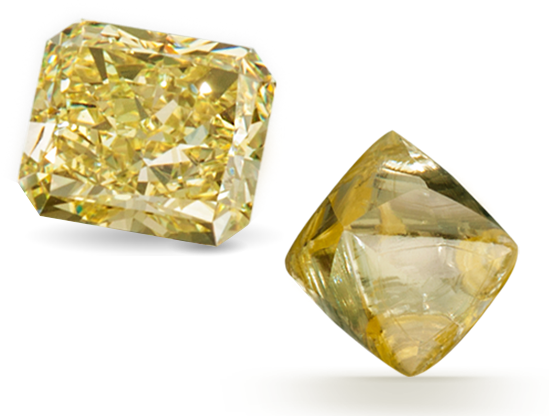
Gem diamonds in Delta Gem’s D-to-Z range usually decrease in value as the color becomes more obvious. Just the opposite happens with fancy color diamonds: Their value generally increases with the strength and purity of the color. Large, vivid fancy color diamonds are extremely rare and very valuable. However, many fancy diamond colors are muted rather than pure and strong.…

Read more

Diamond

Diamond

Diamond forms under high temperature and pressure conditions that exist only about 100 miles beneath the earth’s surface. Diamond’s carbon atoms are bonded in essentially the same way in all directions. Another mineral, graphite, also contains only carbon, but its formation process and crystal structure are very different. Graphite is so soft that you can write with it, while diamond…

Read more

Citrine

Citrine

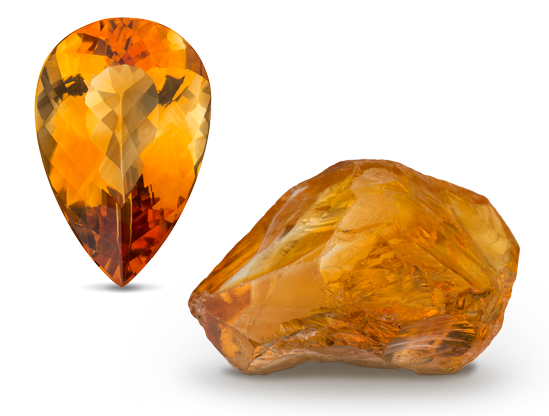
Citrine is rare in nature. In the days before modern gemology, its tawny color caused it to be confused with topaz. Today, its attractive color, plus the durability and affordability it shares with most other quartzes, makes it the top-selling yellow-to-orange gem. In the contemporary market, citrine’s most popular shade is an earthy, deep, brownish or reddish orange. Iron A…

Read more